The nominations are in, and “Hugo” tops the list with 11 Academy Award nominations. The film, directed by Martin Scorsese, earned nominations for best film and best director. It is one more example of books’ inspiring movies we love!
Already an Award-Winning Story
“Hugo” is based on the 2007 book The Invention of Hugo Cabret, which won the Caldecott Medal in 2008. Written and illustrated by Brian Selznick, it was the first novel to earn the honor. The book has 533 page, which include 284 illustrations. Selznick says The Invention of Hugo Cabret is “not exactly a novel, not quite a picture book, not really a graphic novel, or a flip book or a movie, but a combination of all these things.”
Selznick drew inspiration from the life of French filmmaker Georges Méliès. Méliès had an extensive collection of automata, or wind-up figures, though these have long since been lost or sold. The filmmaker died without having made his fortune, even though his films were exceptionally popular in the United States. Selznick also chose to set the book in a Paris railway station because Méliès actually had a booth there—his door is one of the illustrations in the novel.
In the book, Méliès is godfather to Isabelle, who accompanies the orphaned Hugo on most of his adventures. The 12-year-old Hugo works in a busy Paris rail station as a clock keeper. The beauty of the illustrations and the ingenuity of the story made the novel an easy choice for a movie adaptation, and there’s even talk of a French television series based on the novel.
As the movie has garnered so much attention, the book has once again found a well deserved place in the spotlight. Signed first editions will make exceptional additions for collectors who focus on movie tie-ins, Caldecott winners, or children’s books. What’s your favorite book that has found its way to the big screen? And what are your predictions for the Academy Awards?
Today would be the 306th birthday of Benjamin Franklin, whose contributions stretched far beyond his role as Founding Father. The polymath inventor was a significant figure in the American Enlightenment, paving the way for the evolution of politics, science, and even the country’s infrastructure.
Humble Beginnings
Franklin’s father, Josiah Franklin, was a soap and candle maker who emigrated to Boston with his first wife, Anne Child, in 1683. The two had seven children together before Anne passed away. Josiah remarried Abiah Folger in 1689; Benjamin was their eighth child—and Josiah’s fifteenth.
Franklin’s parents had little money, so Franklin received only a few years of formal education. He continued on his own, reading everything he could get his hands on. When Franklin was 12, he began an apprenticeship with his older brother James, learning the printing industry.
Launching a New Career
Five years later he ran away to Philadelphia, effectively making him a fugitive! Franklin soon established himself as a leader in Philadelphia’s intellectual community. He was made Grand Master of the local Masonic lodge by 1734, a title that illustrates his esteem in the community. Here’s a look at other, lesser known milestones in Franklin’s life and career:
In 1730 Franklin entered a common-law marriage with Deborah Read after her husband ran off with her dowry. Franklin had proposed to Deborah years before, when she was fifteen, but her mother objected to their match.
Deborah allowed Franklin’s illegitimate son, William, to become a part of their family. William grew up to be the last Loyalist governor in the colonies, for which his father could never forgive him. The two were estranged, and William eventually settled in England.
Franklin was a prolific inventor. He is credited with creating the lightning rod, bifocal glasses, and the Franklin stove, among many others. He never sought patents for his inventions, noting that they should be used for bettering society.
Always interested in expediting news delivery, Franklin began to explore ocean currents and their effect on the duration of ocean voyages. With the help of his cousin, he identified and named the Gulf Stream, which had a significant impact on nautical exploration and seafaring.
Franklin and his contemporary Leonhard Euler were the only major scientists of the time to support the wave theory of light. A major underpinning of modern physics, this theory is the basic basis for the work of countless modern scientists, including Stephen Hawking.
Though the field of economics would not be recognized until Adam Smith published Wealth of Nations in 1775, Franklin lent an economist’s eye to issues affecting farmers, such as price controls and subsidies for the poor. He also strongly advocated the use of paper money over metal-based currency.
Franklin was the first chess player recognized by name in the American colonies. An avid player, he was also one of the earliest authors to address the game. Franklin was even inducted into the US Chess Players’ Hall of Fame in 1999.
All the while, Franklin built an extraordinary reputation as a statesman and diplomat. Though Franklin would never serve as President, his revolutionary spirit and academic achievements have earned him a place as a truly beloved figure in American history. Franklin’s legacy of excellence remains an inspiration every day.
The month of January: a time for new beginnings…and New Year’s resolutions. Already many of us are already grappling with the challenge of maintaining our resolve. What better inspiration for fulfilling those promises, than a look at the heroes who have attempted one of the ultimate challenges: mountaineering.
from John Muir's travels
Fascinating Natural Obstacles
For ages mountain climbing had fascinated us. The physical challenges and natural splendor of the world’s highest peaks continues to inspire amateurs and experts alike. Early mountaineering expeditions included the frontiers of the Americas. Colonial expansion exposed us to natural challenges around the world.
These dangerous explorations were initially the responsibility and (perhaps) privilege of government officials, but in the last fifty years private citizens have been able to follow suit. Mountaineering has inspired an entire cadre of explorer-authors to recount their experiences.
Though John Muir occupies history as a naturalist, his occupation required extensive exploration, most notably into Alaska. His travelogue, Travels in Alaska is so beautifully written that it has entered the canon of literature.
Captain James Fisk led numerous exploratory expeditions throughout the Rocky Mountains during the American Gold Rush and reported his findings to the Secretary of War, who in turn presented them to Congress. Fisk took an unconventional approach, allowing civilians to accompany him.
George Mallory took part in the very first British expedition to Mount Everest in 1922, when he discovered a glacial pass that allowed ascent of the peak’s north side. He made two more trips up the mountain, the second of which led to his demise (1924).
In 1950 Maurice Herzog and Louis Lachenal successfully reached the peak of Annapuria, the tenth highest mountain in the world. Herzog extensively documented the climb in his book, Annapurna: The First 8,000 Metre Peak.
Following in Mallory’s footsteps was Sir Edmund Hillary. Hillary and Nepalese Sherpa Tenzing Norgay were the first to reach Mount Everest’s summit in 1953. Hillary has written extensively about his experiences, and many authors have found him a fascinating subject for their biographies.
The 1950’s proved an era of exploration. Austrian explorer, geographer, and author Heinrich Harrer was on the climbing team that first ascended the north face of the Eiger in Switzerland. He later earned acclaim as author of Seven Years in Tibet, which tells of his years exploring the Himalayas.
Not all adventures are planned. Nando Parrado wrote Miracle in the Andes after surviving the crash of Uruguayan Air Force Flight 571. The entire Uruguayan rugby team was on board when the plane crashed in the Andes Mountains. Parrado and his fellow survivors were trapped on a mountain for two months before attempting the ten-day climb to safety.
Journalist and author Jon Krakauer made a name for himself after making several journeys to Mount Everest. The author of Into the Wild (1996) and Into Thin Air (1997) has also written numerous magazine articles chronicling his adventures.
The works and adventures of these figures can inspire us to our own greatness. What adventures do you have planned for 2012?
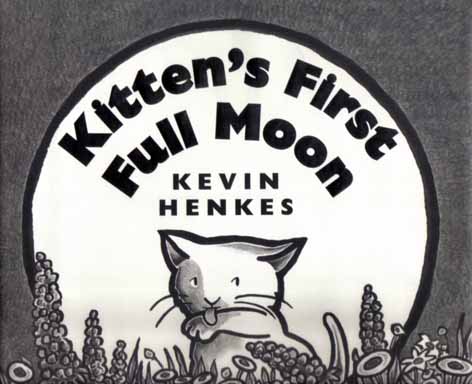
Every year, the Association for Library Service to Children, a division of the American Library Association (ALA), honors the best in children’s literature. The Caldecott Medal, Newbery Medal, and Coretta Scott King Award are the among the most sought after honors for children’s books.
The Newbery Medal
In 1921, Frederic G. Melcher proposed to the ALA that an award be established to recognize outstanding works of children’s literature. He suggested naming the award after John Newbery, an 18th-century bookseller. The goal of the award: “To encourage original creative work in the field of books for children. To emphasize to the public that contributions to the literature for children deserve similar recognition to poetry, plays, or novels.” The Newbery Award thus became the first honor in the world designated explicitly for children’s books. Prior winners include many favorites in contemporary juvenile literature:
Randolph Caldecott stood out as one of the preeminent children’s illustrators in 19th-century England. He brought a special humor, movement, and vitality to illustrations. When in 1937, a member of the Newbery Committee suggested a second award for illustration, it seemed natural to name it after Caldecott.
Each year, the Newbery Medal Committee also selects a winner for the Caldecott Medal. American picture books published in the previous year are eligible. Past winners include the following exceptional children’s books:
The purpose of the Coretta Scott King Award is to recognize exceptional African American authors and illustrators. Greer named the award for Coretta Scott King to commemorate her continued efforts to promote the vision of peace that her husband, Dr. Martin Luther King, Jr. introduced during a period of great turmoil in US history.
The Coretta Scott King Award was the idea of Glyndon Greer, who organized the award in 1969 with the help of other New Jersey Library Association members. The first award was presented the following year. It was not until 1974 that illustrators were also recognized; now an author and illustrator win the prize each year. In 1979, the award was officially recognized and adopted by the ALA.
These award-winning books for children offer excellent inspiration for collectors young and old. They provide a means of introducing kids to books of lasting value and remind adults of the beauty and simplicity of youth. Many of them became rare books in exceptional condition, especially in first edition or signed by the author. Which award-winning children’s books are in your personal library?
With the release of the trailer for JRR Tolkien’s “The Hobbit,” fans are buzzing about the much anticipated movie. Meanwhile a new adaptation of The Girl with the Dragon Tattoo opened this month, stirring renewed interest in Steig Larsson’s novels.
That got us thinking about other book-to-movie adaptations. Here’s a look at past favorites, in no particular order. What would you add to the list?
Lord of the Rings: he Lord of the Rings series has been one of the most successful adaptations to date, finding a strong following among a wide variety of audiences while preserving the integrity of Tolkien’s exceptional literature.
Silence of the Lambs: Thomas Harris’ psychological thriller captivated readers, and it found new life on the big screen. The award-winning film starring Jodie Foster and Anthony Hopkins was only the first of Harris’ novels made into movies.
Atonement: The Oscar-winning adaptation of Ian McEwan’s masterpiece starred Keira Knightley, James McAvoy, and Saoirse Ronan. The film opened the 64th Venice International Film Festival, making then 35-year-old Joe Wright the youngest director to open the festival.
Jurassic Park: Though other Michael Crichton novels have found their way to the theater, Jurassic Park set a new standard for suspense movies. And…we love dinosaurs.
Chocolat: This tale of romance and drama brought together an outstanding cast and reminded us why we have such a love affair with chocolate. Adapted from a novel by Joanne Harris, the movie won five Oscars.
Harry Potter: We can’t pick just one of the movies! These adaptations of JK Rowling’s whimsical and charming novels truly inspired people of all ages to discover a love for reading.
The Thief Lord: Cornelia Funke consistently thrills readers with tales of magic and adventure. The 2006 adaptation of The Thief Lord delightfully brought all that to the big screen.
Casino Royale: But really any James Bond movie will do! Seven different actors have played the world’s favorite British spy, and Ian Fleming’s books contain all the elements for awesome adventure stories: intrigue, danger, gadgets, and even a little romance.
The Notebook: Perhaps we’re partial to Nicholas Sparks because he comes from our neck of the woods. But The Notebook stole our hearts. Ryan Gosling and Rachel McAdams delivered stellar performances in the film version.
The da Vinci Code: Dan Brown was runaway success with this book, and the movie certainly didn’t disappoint anyone. Tom Hanks, ancient conspiracy theories, and plenty of action really made this adaptation a hit.
This month Tom Cruise has been making headlines as Ethan Hunt in the latest “Mission Impossible” movie. But before “Mission Impossible,” another famous spy arrested our imagination: James Bond. The dashing and debonair 007 was the creation of Ian Fleming, who has earned a reputation as a legendary author.
Inspiration in Action
Fleming got his start as a journalist, but later entered the British Royal Navy as an intelligence officer. It was here that he gained experience in the world of espionage. Fleming’s first appointment was as a personal assistant to Rear Admiral John Godfrey, who was the Director of Naval Intelligence. Though Fleming had no real qualifications for the position, it proved an excellent fit, and he quickly grew into the role.
Fleming later worked with Godfrey, Colonel “Wild Bill” Donovan, and President Franklin D. Roosevelt to coordinate information among various intelligence agencies, including the US agency that eventually evolved into the CIA. That experience prepared Fleming for Operation Golden Eye, an endeavor to secure an intelligence framework in Spain if the country were taken over by Germany.
Transition to Authorship
Before Fleming ever had aspirations of authorship, he was an unabashed bibliophile who began building an extensive personal library in 1929. Fleming concentrated heavily on books about science and technology, though he also collected other “books that made things happen.” His wide reading is often evident in his own work.
In 1942, Fleming visited Jamaica and determined that he’d build a home there after World War II ended. Three years later, Fleming named his estate Goldeneye, not only after his own eponymous military operation, but also after Carson McCullers’ Reflections in a Golden Eye. He didn’t set about writing his own novel until 1952.
The manuscript for Fleming’s first novel, Casino Royale, took Fleming only a few months to write. He was reluctant to share the novel because, as he told close friend William Plomer, “the element suspense is completely absent.”
Fleming himself designed the original cover art for Casino Royale, and the book sold out in the UK in less than a month. Subsequent printings remained equally popular.
The real James Bond was a British ornithologist who authored Birds of the West Indies. The book attained world fame as Fleming, a birdwatcher himself, chose the name of its author for the spy hero of Casino Royale, as he was looking for a name as “ordinary as possible.” A reference to this connection pops up in the 2002 adaptation of “Die Another Day,” which stars Pierce Brosnan and Halle Berry (watcha clip here).
Fleming’s brother Peter provided significant inspiration for James Bond’s character. Peter served as an intelligence officer behind the lines in Norway and Greece.
From 1953 to 1964, Fleming wrote a new Bond novel every year during his annual holiday in Jamaica. By 1966, twelve novels and two short-story collections had been published. The last two (Man with the Golden Gunand Octopussy and the Living Daylights) were published after Fleming’s death.
Only Bond’s first five novels received positive reviews from critics. The tides began to turn with Dr. No, which received extremely harsh criticism from a number of prominent reviewers. Despite the reviews, Fleming’s work remained wildly popular among readers.
To date, Ian Fleming’s Bond books are some of the most popular fiction books of all time; they have sold over 100 million copies worldwide. Seven different actors have played James Bond, and the character still continues to capture our imagination.
Christmas is fast approaching, and you still have plenty of gifts to buy. What to do? Find just the right book for every name on that list! The right book gives a lifetime of joy and pleasure. Walter Rodgers, of the Christian Science Monitor, reminds us that books have incredible power because “they are our bulwarks against time, ignorance, and barbarity.”
Christmas Classics
People of all ages have fond memories of classic Christmas tales. Perennial favorites include Clement Clarke Moore’s Night before Christmas and Chris Van Allsburg’s Polar Express, along with works by legendary illustrator Charles Van Sandwyk. First editions of these books make lovely additions to any personal library, and are also a wonderful way to introduce youngsters to the world of rare books.
But not all Christmas-themed books are illustrated; numerous authors have focused on the holiday season as backdrops for their works. Saul Bellow’s Dean’s December, for instance takes place during the holiday season. And Nancy Atherton breathes a little Yuletide cheer into her famous series with Aunt Dimity’s Christmas.
Legendary Authors
Certain authors have remained popular throughout the ages, and some modern authors have emerged as true literary emissaries of our age. From Umberto Eco and Doris Lessing, to Philip Roth and JRR Tolkien, these legendary authors represent some of the greatest artists and thinkers of our century.
First editions of works by these authors make excellent gifts. Their universal appeal and perennial popularity among collectors mean that they’ll generally continue to hold value over time.
Hobbies and Interests
A fantastic way to select gift books is to consider the recipient’s hobbies and interests. Books about a favorite subject are always welcome, and they make lovely complements to the hobbyist’s library:
If you’d like help selecting the right books for everyone on your holiday list, or if you have questions about shipping options, please feel free to contact us.
The holidays have arrived, and with the season come hectic schedules. It can be easy to lose sight of the joy and celebration that also accompany this time of year. Our favorite children’s Christmas books beautifully capture those themes.
A Classic Christmas Tale
When Clement Moore penned A Visit from St. Nicholas in 1822, he had no idea that the poem would endure for over a century. In fact, the piece was first published anonymously. It was only later that Moore acknowledged authorship. We now know the poem as Twas the Night before Christmas, and many families now read it every Christmas Eve.
Children’s illustrators are frequently inspired by this beloved tale. Tasha Tudor’s rendition is particularly lovely. Renowned pop-up artist Robert Sabuda also created a wonderful limited edition of the book that people of all ages will cherish.
Modern Favorites
Modern authors and illustrators have followed in Moore’s footsteps, including many Caldecott winners. They’ve introduced new stories to our Christmas traditions:
Hilary Knight’s Christmas Nutshell Library includes Knight’s interpretation of ‘Twas the Night before Christmas, along with three other modern holiday tales.
The Polar Express by Chris Van Allsburg seized our imaginations and even inspired a major motion picture starring Tom Hanks.
Mother Nature can wreak havoc on rare books. Sunning, water damage, and humidity can all cause damage to your collection. Another enemy of your books may also be lurking on your shelves: the dreaded bookworm. They’ll tunnel right into the block, riddling the book with countless gullies and channels.
Bookworms aren’t really worms—they’re actually the larvae of several species of beetles. While these insects don’t generally attack modern books, they pose a significant threat to antiquarian books. The critters seem particularly fond of the glues used on the backs of older books, particularly those of Italian provenance. From the backs of the books, the insects often move on to the block, munching right through the pages.
You may have seen the telltale signs of bookworms: fine dust falling from between the pages when you open up a favorite volume, or tiny piles of paper dust on your shelves. These insects also don’t stop munching when they’re done with your favorite tomes. They may also feast on your bookshelves. A few simple steps will help keep your library pest free:
Keep food away from your books! I love a good snack while reading just as much as the next person, but crumbs in books attract all kinds of insects.
Use camphor or naphthalene as a deterrent. You can soak linen in either, and place it on the bookshelf. Re-soak the fabric whenever the scent fades.
Some experts recommend sprinkling fine pepper along the edges of the bookshelf, though Keating’s Insect Powder might be an equally effective alternative.
Don’t use pesticide or plastic wrapping on your rare books without first consulting a professional.
Maintain optimum humidity levels in your library. High moisture levels can attract insects.
If insects have struck your rare books, it’s important to act fast if you want to prevent further damage. To kill existing insects, place the book in a bag with a cloth soaked in ether. Repeat every two weeks for a few months to kill any other larvae that may have hatched.
If insects have damaged the boards of your book, talk to a professional book binder about your options. The boards may require replacement. This is often the best course of action, since the old boards may still contain insect eggs. A qualified book binder will be able to assess the damage and suggest multiple options for repair.
After investing in rebinding and repair, you may want to consider a clamshell case for your book. Made to precisely fit each book, clamshell cases offer extra protection from dust and moisture.
We all know that aroma. Perhaps it evokes trips to the library as a child, or the cozy ambience of a grandfather’s study. It’s the distinctive scent of old books.
The Science behind the Scent
Scientists say that “old book smell” is more than just mustiness; it contains hints of grass and vanilla. That’s because all the compounds used to make the book release distinctive odors as they break down. For example, lignin, which is present in all wood-based paper, is closely related to vanillin. As it breaks down, the lignin grants old books that faint vanilla scent.
It’s even possible to approximate the age of a book based on its smell. Chemists have identified 15 substances often present in books (known as VOC’s) that degrade (and therefore emit a gas) at a predictable rate. The researcher behind the project, Matija Strlic of University College London’s Centre for Sustainable Heritage, was inspired to investigate when he saw a conservator sniffing paper to assess its quality. Chemist Lorraine Gibson has taken Strlic’s research further, and is working on a test to help experts date books and other paper materials based on the VOC breakdown.
Banishing Other Odors from the Library
But what if a book has a stronger (and less pleasant) odor? Cookbooks, for instance, may smell of food if they’ve been stored in the kitchen. Other scents that may creep into your pages include tobacco or nicotine. Poor air circulation—along with the resulting mold and mildew—are also frequent culprits of malodorous pages.
While an unappealing smell doesn’t directly impact the value of a rare book, it can decrease your enjoyment of that book. If that’s the case, have hope! With these tips from the Dartmouth College Library, you can rid your volumes of unwanted odor:
Find a container large enough to hold your book, and another larger container with a lid. A garbage can and a plastic crate work well. Just be sure that the containers have never been used for food or liquid.
Place an odor-absorbing material (like baking soda, charcoal briquettes, or even kitty litter) in the larger container.
Gently open your book and place it flat inside the container. If you’re doing multiple books at once, you can also leave the books upright, with the pages slightly fanned out.
Put the smaller container inside the larger one, and close the lid of the larger container.
Check the book after several days. If the book still stinks, close it up again. If the offending smell has dissipated, put the book back in your library.
And a word about your library: it’s necessary to take a few precautions to keep the smell from returning. Be sure that the air circulates well in your library, and control both temperature and humidity. Gently dust your books on a regular basis, as dirt and other buildup can encourage the growth of mold and mildew.